
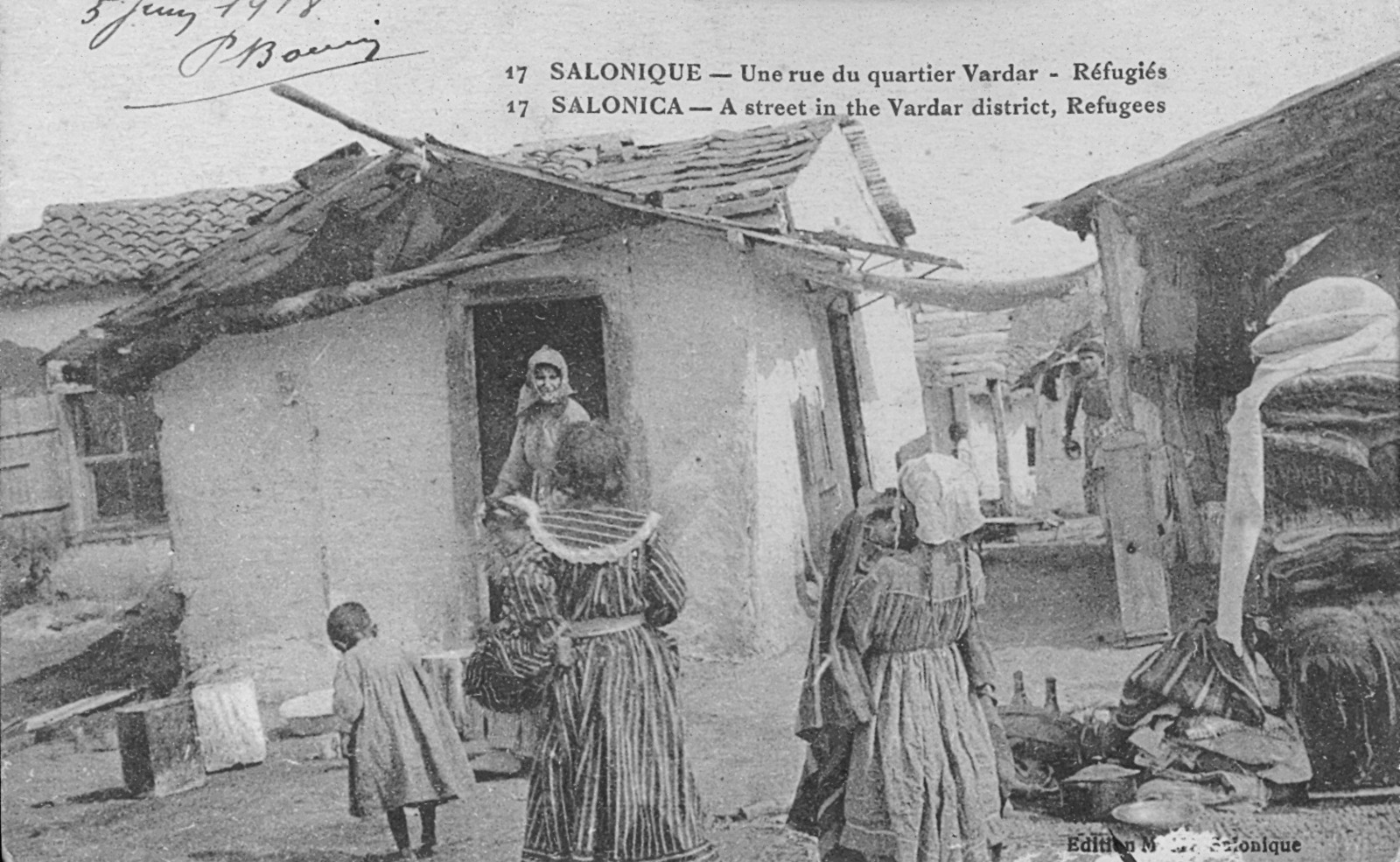

Les conflits militaires successifs (guerres balkaniques de 1912-1913, Grande Guerre de 1914-1918, guerre gréco-turque de 1919-1922, guerre d’Espagne de 1936-1939), les politiques de dénationalisation mises en œuvre par les régimes autoritaires (URSS, Italie fasciste) et les transformations géopolitiques qui en ont résulté, ainsi que les politiques d’épuration ethnique et de construction des identités nationales lancées au nom de la « sécurité nationale », ont engendré d’importantes vagues de déplacements de population, volontaires et involontaires, dans la plupart des pays européens ainsi que dans l’Empire ottoman / la Turquie (par exemple, l’échange obligatoire de populations entre la Grèce et la Turquie en 1923).
De l’exil politique du XIXᵉ siècle aux communautés ou minorités ethniques persécutées pour ce qu’elles sont et non pour ce qu’elles pensent, comme l’écrivait Hannah Arendt (We Refugees, 1943), la signification et le statut du terme « réfugié » ont évolué au fil du temps, de même que les politiques publiques qui s’y rapportent.
Une partie de ces réfugiés est retournée dans leur pays d’origine, mais beaucoup sont restés dans les pays où ils avaient trouvé refuge. Ce sont souvent les villes frontalières qui ont accueilli le plus grand nombre de réfugiés. Dans un premier temps, des solutions d’hébergement d’urgence et temporaires ont généralement été mises en place, dans des camps de réfugiés, des casernes militaires, des bâtiments publics ou des locaux abandonnés. Les implantations spontanées, constituées d’abris improvisés, ont également été fréquentes, nombre d’entre elles évoluant progressivement vers des installations permanentes. Par la suite, des programmes de logement de petite ou de grande envergure (autoconstruction, constructions organisées, etc.) ont été lancés par les autorités locales ou centrales, des organismes nationaux et/ou des organisations internationales dans le cadre de la réhabilitation des réfugiés, entraînant d’importantes transformations sociospatiales à l’intérieur des villes ou dans leurs périphéries.
Dans ce contexte, ce panel accueille des communications interrogeant l’émergence de la catégorie du logement pour réfugiés et présentant des études de cas ainsi que des recherches comparatives portant sur les politiques de logement des réfugiés, les formes temporaires et permanentes d’habitat et d’implantations, le rôle des autorités locales et des instances nationales dans les programmes de réhabilitation, ainsi que celui des organisations internationales dans la diffusion de modèles d’habitat, de modes de vie et de schémas de développement urbain, depuis la première moitié du XXᵉ siècle jusqu’à la Convention de Genève relative au statut des réfugiés de 1951.
English
The main goal of this panel is to present and compare housing policies launched to accommodate large waves of refugees generated from the turbulent conditions in the first half of the 20th century in Europe, as well as the resulting significant socio-spatial transformations within or in the fringe of the towns and cities.
The successive military conflicts (Balkan wars 1912-1913, Great War 1914-1918, Greek-Turkish war 1919-1922, Spanish War 1936-1939), the policy of denationalization of authoritarian regimes (USSR, Fascist Italy) and the resulted geopolitical transformations, as well as ethnic cleansing and national identity construction policies launched on grounds of ‘national security’, generated large voluntary and involuntary displacement waves of population in most of European countries as well as in the Ottoman Empire/Turkey (for example, the compulsory exchange of populations between Greece and Turkey in 1923).
From the political exile of the 19th century to the communities or ethnic minorities persecuted for who they are and not for what they think, as Hannah Arendt would say (We refugees, 1943), the meaning as well as the status of the term "refugee" has changed over time along with relevant public policies.
A part of these refugees returned to their homelands, but many of them remained in the countries to which they fled. It is often the border towns that received the most refugees. At the beginning, emergency and temporary accommodation was usually used to shelter the refugees in refugee camps, army barracks, public buildings or abandoned premises. A common phenomenon was also arbitrary settlements with improvised accommodation, many of which evolved into permanent ones. Later, small- or large-scale housing programmes (self-help housing, organized construction, etc.) were initiated by local or central authorities, national bodies and/or international organisations for the rehabilitation of the refugees, resulting to significant sociospatial transformations within or in the fringe of the towns and cities.
Within this context, this panel welcomes papers that question the emergence of refugee housing category, and present different case studies and comparative research concerning refugee housing policies, temporary and permanent forms/types of refugee houses and settlements, the role of local authorities or national bodies in the refugees’ rehabilitation programmes, as well as of international organizations in the transfer of housing and living models and urban development patterns, during the first half of the 20th century until the 1951 Refugee Convention.
Document-joint
